-
Definition Of Arguments:
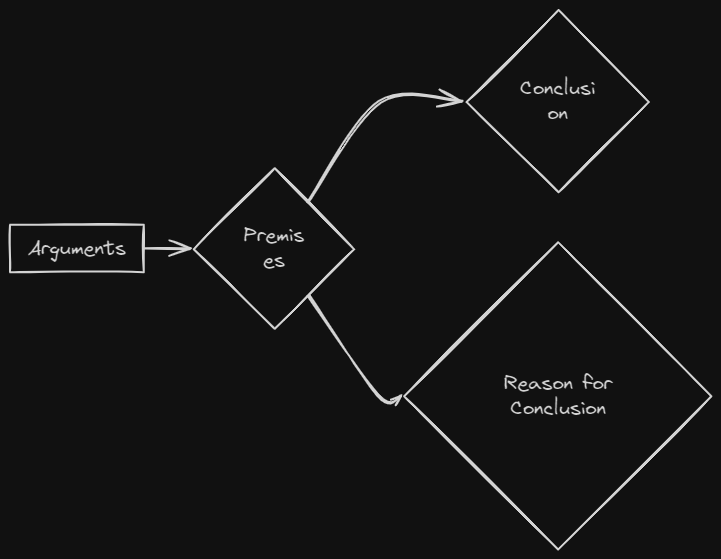
- (a) (connected) A series of sentences, statements or propositions
- (b) Where some are the premises
- (c) and one is the conclusion
- (d) where the premises are intended to give a reason for the conclusion
-
Every argument is not intended to establish a conclusion that the audience did not believe before.
- Pythagorean theorem would be a nice example as you already believe in it, it shows you how the guy got there or its about explaining the process
======
Reptiles include turtles, alligators, crocodiles, snakes, lizards, and the tuatara. - Not an Argument World War II occurred after World War I occurred. - Not an Argument World War II occurred because World War I occurred. - It is an argument The sides of this right triangle are 1 meter long, so its hypotenuse is 2 meters long. - Also an argument because so is used there as a reason marker
======
- Justifying/Persuading
- Your friend buying a car, two roles; salesman and talking as a friend
- You’re not necessarily trying to persuading your friend if you’re talking to her as a friend, you would be perfectly happy if she chose something else
- Whereas salesman wouldn’t be
- Goal matters, you could give exactly the same reasons but for different goals.
- Justficiation tries to give good reasons whereas persuasion tries to change your beliefs or actions (bad arguments can do that)
- Karşılaştırmalı Okuma Bu justification ve persuasion muhabbetini Machivelli’nin kitabı ile karşılaştırmalı incelemek çok sağlıklı olur
- Your friend buying a car, two roles; salesman and talking as a friend
Whether you succeed in persuading someone depends on what effect your argument has on that person. - True because persuading or convincing someone means them (your audience) believing your conclusion
Whether you succeed in justifying a conclusion depends on what effect your argument has on the audience. - To justify a conclusion is to give a reason for that conclusion, but the audience might not understand or accept that reason, even when it is a good reason. Then the argument might have no effect (or an unintended effect) on the audience. One can give a reason for a conclusion, and it will be a reason, regardless of the effect on the audience.
- You cannot persuade or get everybody to accept your conclusion, it doesn’t work that way
- Genel politik söylemlerdeki argüman eksikliği, bağırarak açıklama ihtiyacı ve kendi politik görüşlerini benimseyen insanlara yönelme ihtiyacı
Hata Yaptığım Sorular
When people use arguments, they always intend to have some effect on other people. - Sometimes we formulate arguments in private in order to figure out what to believe ourselves without telling anyone else. - Garip bir soru ve çözümü ama bilmiyorum, bi mantığı da var gibi
-
Explanation
- The goal of explanation is different from the ones he just explained
- The goal of explanation is to help people understand why something is true
- You already start with the premise that you believe that conclusion, the guy talking about that conclusion also believes that and also explains it
-
Aristos Explanations For Explanation
The Best Notes You’ll Ever Make
⚠ Switch to EXCALIDRAW VIEW in the MORE OPTIONS menu of this document. ⚠ You can decompress Drawing data with the command palette: ‘Decompress current Excalidraw file’. For more info check in plugin settings under ‘Saving’
Excalidraw Data
Text Elements
Kinds of Explanations
Causal, Why did something happen?
Why did the bridge collapse?
The earthquake shook it.
Teleological, Why does something exist or happen?
Why did Joe go to the grocery store?
To buy milk.
Formal, Why is something the way it is?
Why doesn’t this peg fit in that round hole?
The peg is square and the hole is round. Definition of fit
Material, What is something made of?
Why is this golf club light?
We need more information. Material composition can influence weight, but other factors like club design also play a role.
Link to original -
Causal: Explains why something happened by citing the cause.
- Sebep
-
Teleological: Explains why something exists or happens by citing its purpose.
- Hedef
-
Formal: Explains why something is the way it is by referring to its form, definition, or established rules.
- Formal
-
Material: Explains the properties of something based on the material it’s made of. However, in some cases, additional information might be needed for a complete explanation (like with the golf club example).
- Materyal
-
Prediction vs Explanation
-
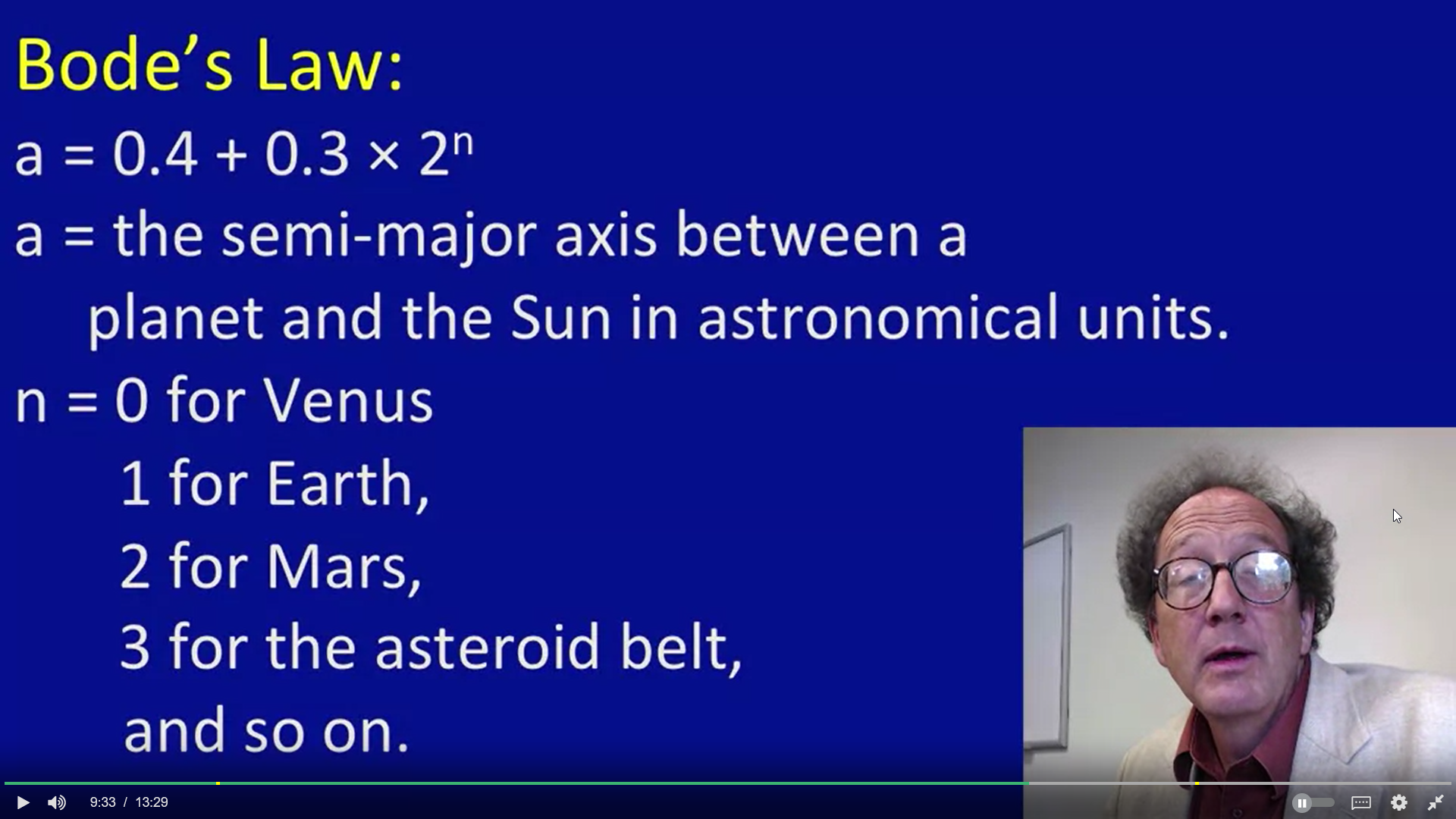
Something can be used to predict but not explain
-
-
Back in the day this was used to explain the masses of planets, the formula generalizes, predicts the mass but does not provide any explanation
-
A woman that has AIDS gives birth to a child with AIDS
- This provides an explanation but not a prediction, it does not guarantee that the child will be born with AIDS
-
-
An explanation attempts to fit a particular pheomenon into a general pattern in order to increase understanding and remove bewilderment and suprise
-
-
Language definitions in (The materials of Arguments)
- Çok fazla not almadım çünkü dilbilimde işlediğimiz muhabbetlerdi ama sanırım not almam gerekecek
-
Meaning
- Wittgenstein refers to it as use
- Hello is used to greet people
- Peki bunu acaba öğrenme teorileriyle nasıl birleştirebiliriz
- İlk aşama anlamak diyordu, bu doğru, yani önce hello nun ne bileyim Fransızca’da nasıl çalıştığını anlıyorsun ama mesela bonjour ve salut farkı da var. Bunun nerede kullanıldığını anladıktan sonra karşılaştırmalı incelemen gerekiyor.
- 6 Levels of Thinking (Abimin de Hep Bahsettiği)
-
Linguistic Act
- The production of a meaningful utterance
- It’s easy
- Syntax (Correct)
- Semantics (Correct)
- It’s basically a meaninful utterance
-
Garden Path Sentences (Anlam Bulanikligi)
- The man who whistles tunes pianos.
- Dedigin zaman anlaşılmıyor ilk bakışta ama parçalarına ayırdığın zaman oluyor
- The man who whistles tunes pianos
- Gibi
- Example
- The man who whistles tunes pianos.
-
Speech Act
- You’re nothing till you say so because saying so makes it so
- Strike zone’un yakınına attığı için vuran eleman vurmamayı seçiyor, pitcher da dönüyor diyor ki hani am I out or was that a walk?
- You’re nothing till i say so
- Most examples include ceremonies, rituals or games (like baseball)
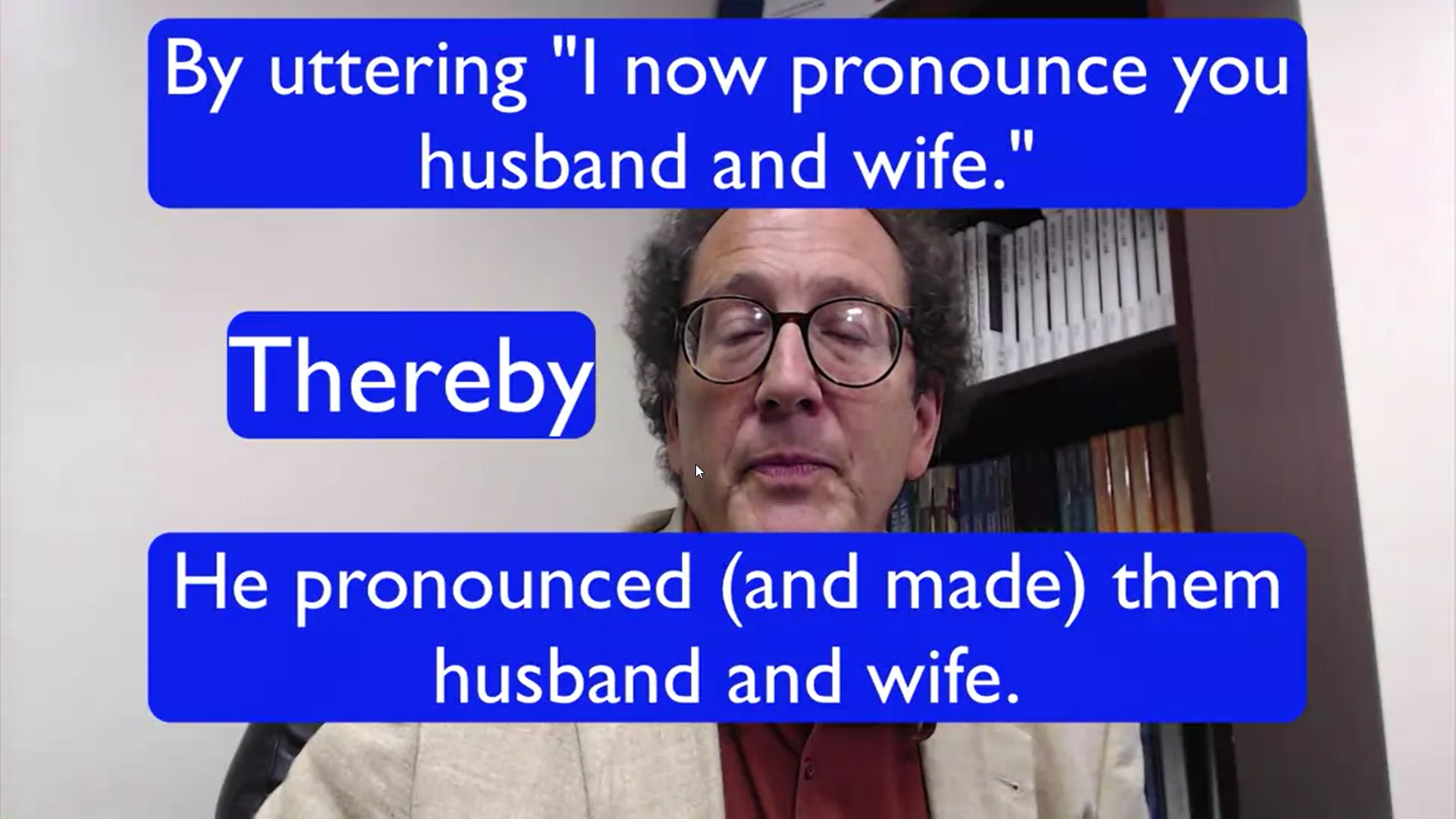
- In weddings, the officiants’ [I now make you husband and wife] is a quality example, his/her saying so changed their relationship
- You’re nothing till you say so because saying so makes it so
-
To segway,
-
thereby test;
-
Then thereby Test:
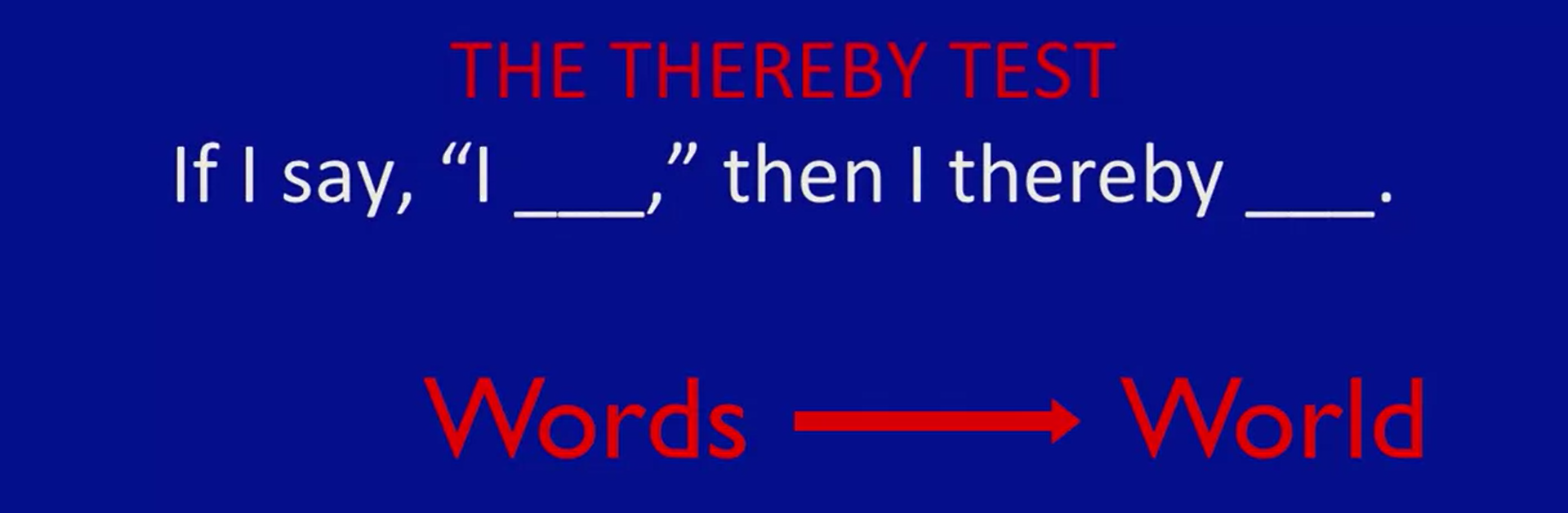
- It requires right circumstances, if you’re not an officiant you can’t just go out and say you’re officiating them, pronuncing husband and wife
- It necessitates you to be an officiant
- Sometimes these right circumstances can be contraversial
- A man can marry a woman but cannot marry another man (According to some yes and for some no)
- It requires right circumstances, if you’re not an officiant you can’t just go out and say you’re officiating them, pronuncing husband and wife
-
SO THE QUESITON OR THE POSITING THEORY BECOMES:
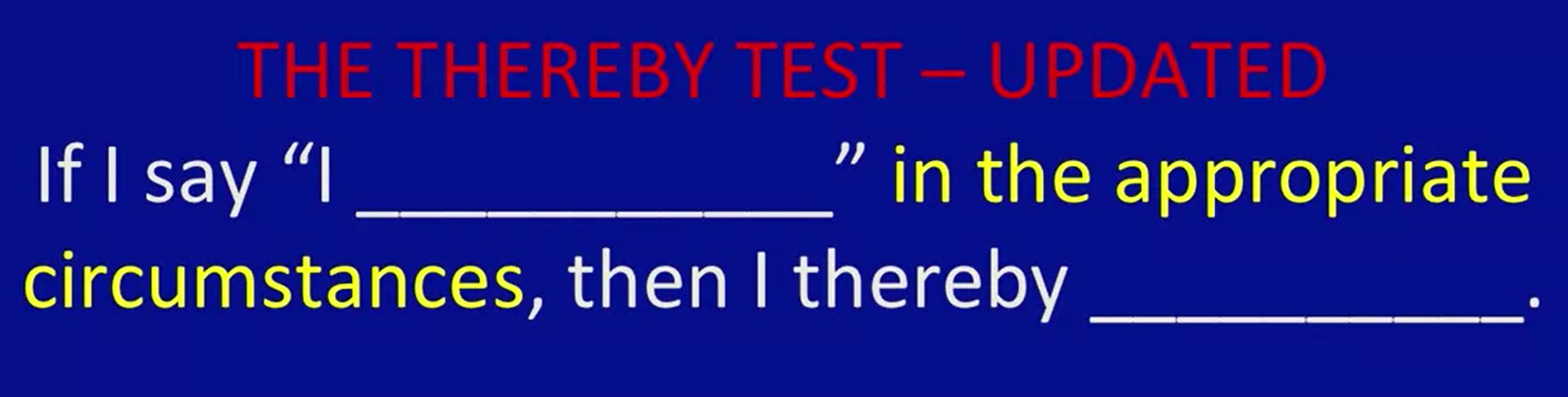
- For example, If I say, I apologize, in the appropriate circumstances, then I thereby I apologize
- There’s a difference between apologizing for real, so being sincere and there’s saying it and you not meaning anything
- For example, If I say, I apologize, in the appropriate circumstances, then I thereby I apologize
-
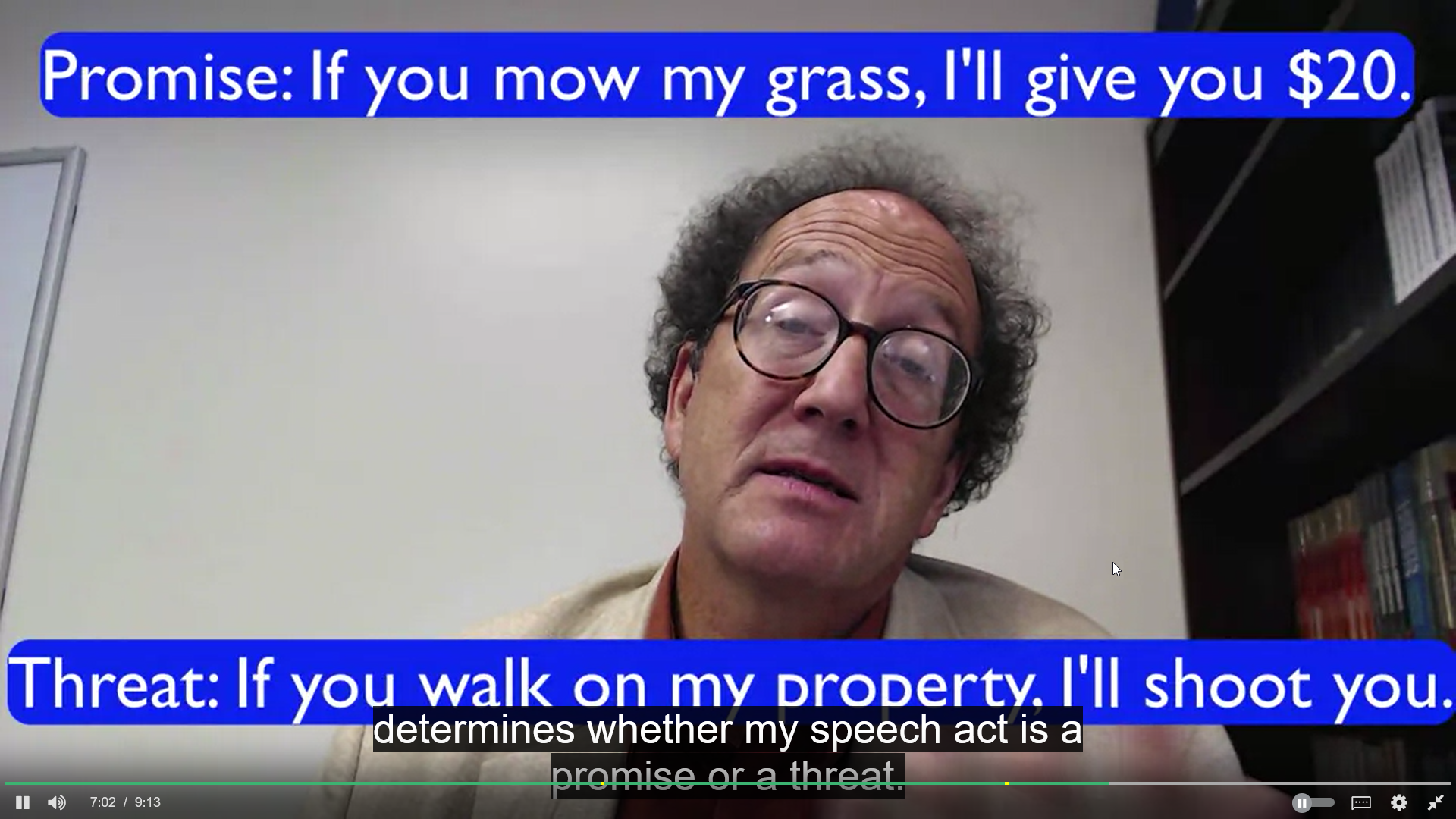
Promise or threat depends on what you intend to do
-
-
Conversational Act
-
Saying something to bring about a change in the world
-
Asking to loan a friend’s car
- I wanted to use his car, and wanted that to be within legal rights too
- I didn’t ask it for the sake of asking it, rather so that i could get the keys to his car and drive it
-
Is the moon full?
- Yes it’s full moon tonight
- Well, am i uttering those words just to expel hot air? No
- I’m trying to inform my friend, to bring about the effect of informing my friend
-
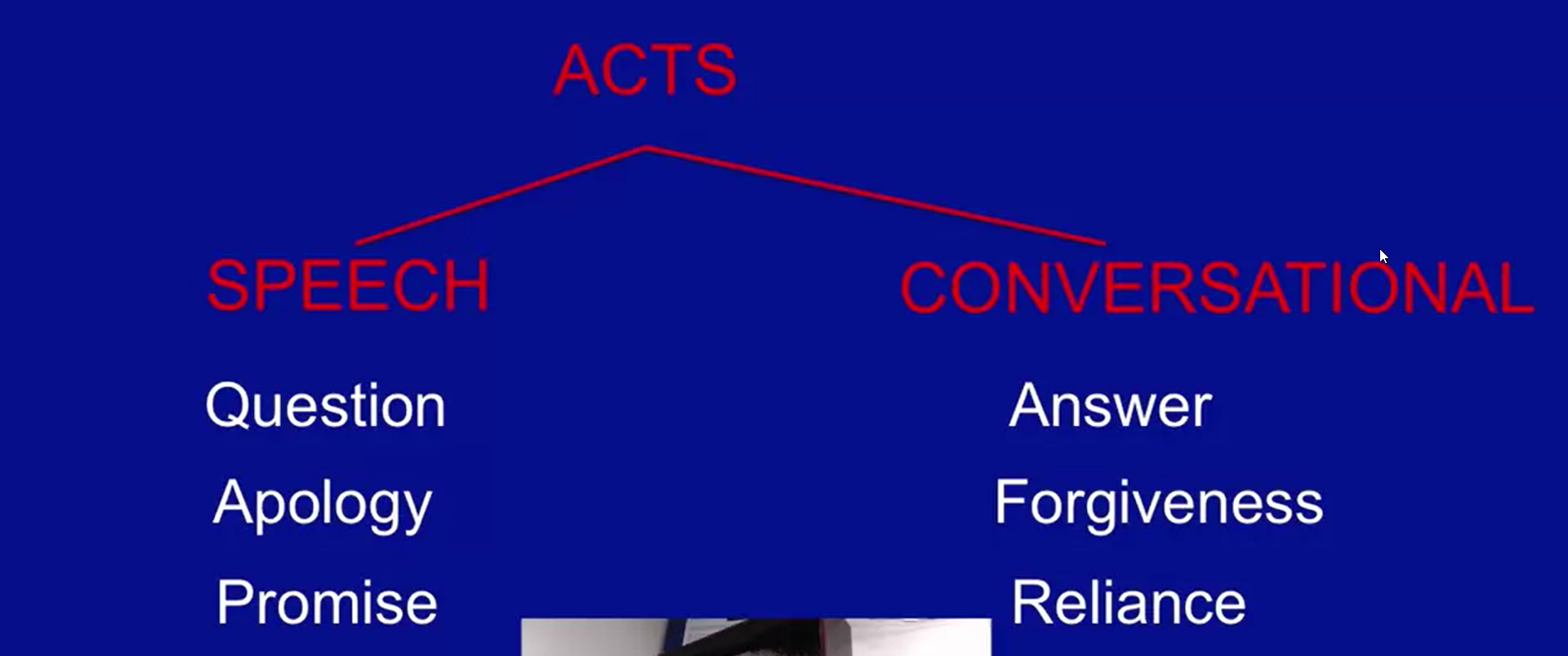
- You ask a question to make the answer so
- You ask for apology to bring about forgiveness or make him forgive you so
-
The conversational act does not occur when that act does not occur
-
Mesela bu conversational act muhabbetinin günlük hayattaki insanlara yansıttığın şeylerle de alakası var
- Mesela birisine yaptığın güzel bir şeyi anlatmaya çalışıyorsun.
- Bugün işte aç bir kediyi besledim
- Burada conversational act var, onu inform ettiğin için bu conversational act
- ama aynı zamanda speech act te kullanıyorsun, belki bu buradaki subtextler olabilir
- Benim yumuşak kalpli bir insan olduğumu bilmeni istiyor olabilirim
- Bu yaptığım eylemin validate edilmesini istiyor olabilirim (Evet çok tatlı bir haraket yapmışsın…)
- Mesela birisine yaptığın güzel bir şeyi anlatmaya çalışıyorsun.
-
Conversational Act 05.45 civarında kaldım, bir filozofun maximlerine giriş yapacaktı
-